
 EN
EN ES
ES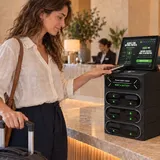
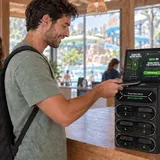
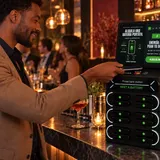
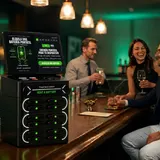

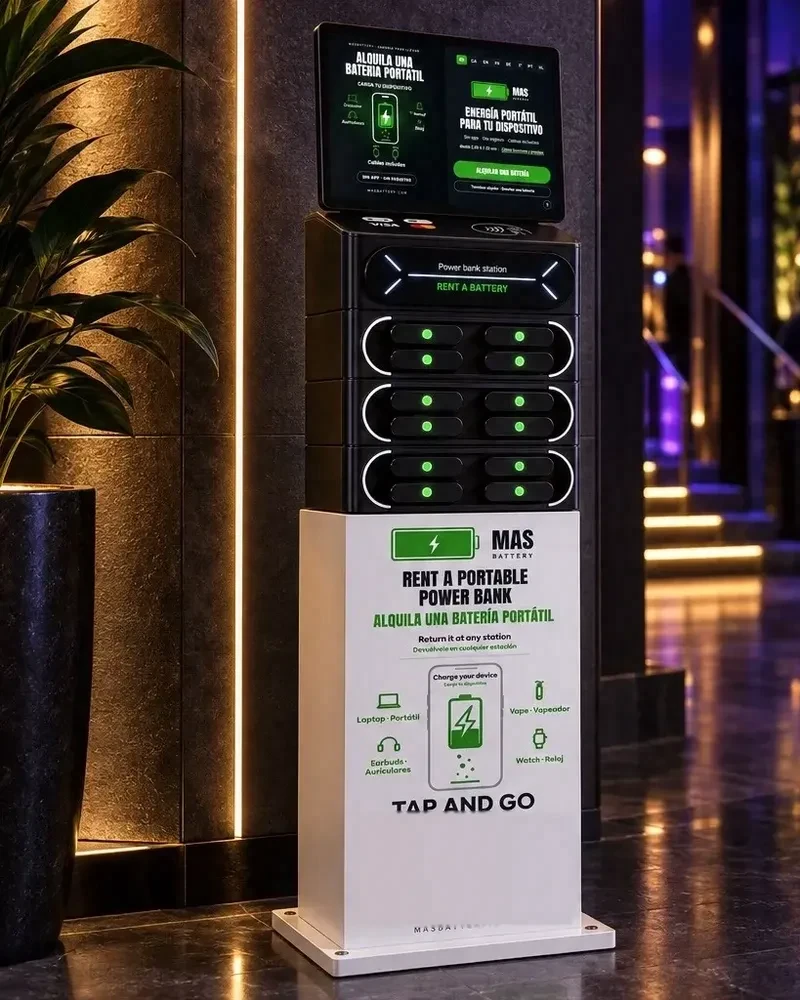
A venue can buy power bank rental stations and run the service itself, or work with an operator that runs it on site. The hardware is the easy part either way. The real work is everything around it: compliance, card holds and refunds, guest support, maintenance and keeping charged power banks where guests are. Whoever owns the stations owns that work.
In short
- Buying the stations means your team takes on compliance, payments, support, maintenance and rebalancing.
- Working with an operator means the venue provides space and power, and the operator runs the service with the scope set out in a proposal.
- The choice depends on whether your team wants to run a payments and hardware service day to day.
- Ask for the full list of tasks in writing before you decide, whichever route you take.
What does running a power bank rental service involve?
Five kinds of work, every day the stations are live:
- Compliance. Making sure the stations and power banks can be placed on the market and used in your venue.
- Payments. Card holds, charging for rental time, releasing the rest, refunds and reconciliation.
- Support. Answering guests who have a question about a charge, a return or a power bank that does not work.
- Maintenance. Keeping stations online, clean and working, and taking worn power banks out of use.
- Rebalancing. Moving power banks between stations so guests can always rent and always return.
The rest of this article walks through each one, so you can see what you would take on and what an operator takes on for you.
What does compliance involve?
Stations and power banks need CE marking and a declaration of conformity. Lithium batteries need UN38.3 certification before they can be shipped. In Spain, electrical and electronic equipment placed on the market has to be registered with the RII-AEE register, and batteries come with their own end-of-life obligations. If you import the hardware yourself, those tasks and the paperwork are yours.
Your insurer and your operations team will also ask for this documentation, together with proof of liability cover. MasBattery stations and power banks are CE marked, UN38.3 compliant for transport and registered with RII-AEE in Spain, and a compliance file is available for your operations and legal team on request. See are shared power banks safe? for the full checklist.
What does handling payments involve?
A rental starts with a temporary hold on the guest's card, not a charge. On return, the system charges only the rental time and releases the rest of the hold. Around that sit several tasks:
- setting the price, the daily maximum and the hold, and showing them on screen before the guest confirms;
- cancelling and refunding automatically when a guest pays and no power bank comes out;
- charging the replacement cost when a power bank is not returned within the period shown on screen;
- answering guests who see a hold on their statement and want to know when it disappears;
- issuing receipts and reconciling every payment with the bank.
On a MasBattery rental, the guest's statement shows MASBATTERY.COM, and the Stripe receipt is issued by Vispromask S.L., which operates the rental service. The guest side is explained on charges, holds and returns.
What does guest support involve?
Guests ask questions at any hour the venue is open: how to return, why a hold is still showing, what to do if the power bank does not charge the phone, or if a station was full when they tried to return. Someone has to answer, in the guest's language, and check the rental record before refunding anything charged in error.
MasBattery support runs through Help on every station screen, email and WhatsApp, in Spanish and English. Your staff do not handle phones, cards or payments.
What does maintenance involve?
Stations need a permanent power connection and have to stay online so payments and returns work. Power banks, the portable chargers guests carry, need to be charged, checked and kept clean, and cables wear with use. A power bank that no longer holds a charge has to leave circulation, and a station with a fault has to be diagnosed quickly.
MasBattery stations are monitored remotely. Maintenance and technical support are part of each proposal, with the exact scope set out there.
What does rebalancing involve?
Guests take a power bank at one station and return it at another. Over a day, some stations fill up and cannot accept returns, while others run low and cannot rent. Someone has to notice and move power banks between stations.
This matters most at events and on large sites. At festivals, MasBattery helps monitor and rebalance stations during the event, as agreed in your proposal. On a site with several stations, guests pick up near where they are and return near where they are going, which spreads the load across the venue.
When does owning the hardware make sense?
Owning can make sense for a venue group that already runs card payments on its own hardware, has a technical team on site every day and wants to handle guest support in house. If that describes your organization, ask any hardware supplier for the full list of tasks above and who covers each one.
When does working with an operator make sense?
When your team wants to offer phone charging without running a payments and hardware service. With MasBattery, the venue provides a visible spot and a power outlet. MasBattery helps with installation, maintenance and technical support, handles guest payments and support, and the venue shares in the rental revenue. How the work is shared and how the revenue is split are set out in each proposal. How a revenue-share power bank rental works explains the model step by step.
What should a venue ask before deciding?
- Who registers and documents the equipment in Spain?
- Who sets up card holds, refunds and receipts, and who reconciles the payments?
- Who answers guests, in which languages and at what hours?
- Who maintains the stations and replaces worn power banks?
- Who moves power banks between stations when some fill up?
- Can stations be added or moved later?
A good proposal answers all of them in writing.
Next step
Tell us about your venue: the type and size, your opening hours and where guests spend their time. We reply within one working day. See how it works for hotels, bars and clubs and festivals, or request a proposal.